
.png)
 5 months ago
97
5 months ago
97
ARTICLE AD BOX
Plays aired during holy month have now become a regular feature of television entertainment landscape
KARACHI:
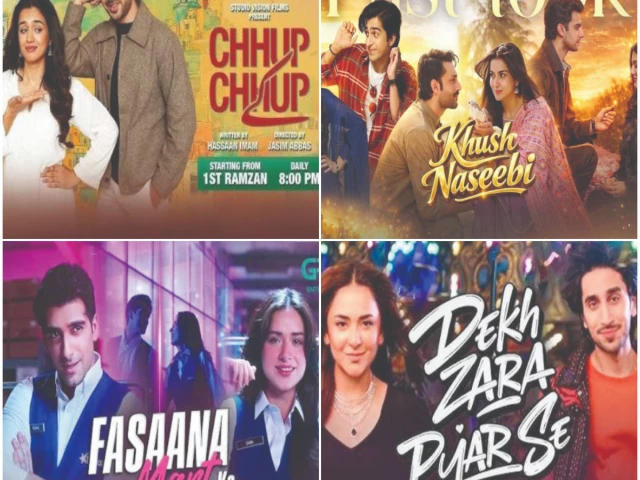
With the arrival of Ramazan, television channels have once again prepared a line-up of light-hearted, family-oriented dramas aimed at attracting audiences during the holy month. This year, however, while teasers and posters have generated excitement, the themes of some productions have also sparked discussion on social media. Over the past few years, Ramazan dramas have become a regular feature of the television entertainment landscape. The trend gained significant momentum after the success of Suno Chanda, which not only achieved strong ratings but also helped strengthen the popularity of its lead actors, including Farhan Saeed and Iqra Aziz. Since then, most major channels have introduced special romantic comedies for the Ramazan slot. Major releases for Ramazan 2026 Among this year's prominent offerings is Dekh Zara Pyar Se on Hum TV. The drama stars Yumna Zaidi and Hamza Sohail in leading roles, alongside veteran actress Bushra Ansari. It is described as a traditional Ramazan romantic comedy centred on family relationships and light humour. The script has been written by Saima Akram Chaudhry, known for popular serials including Chupke Chupke and Suno Chanda, while direction has been handled by Ali Hassan. Industry observers suggest the drama is likely to follow the familiar formula of witty dialogue and extended family settings that typically attract large Ramazan audiences. Meanwhile, Geo Entertainment is set to air Khush Naseebi, a story revolving around romance and family relationships. On Express Entertainment, the sitcom Chup Chupa Ke will focus on family secrets and comic misunderstandings. In recent years, Ramazan comedies have developed a recognisable style built around joint family systems, mischievous characters and fast-paced exchanges. Producers say the series will retain that spirit while incorporating a more contemporary narrative approach aimed at younger viewers. Similarly, Green Entertainment plans to broadcast Fasana Martka, which it describes as blending satire and social commentary with traditional Ramazan entertainment. Ratings race and public response Television analysts say the Ramazan transmission period remains one of the most competitive seasons for the entertainment industry. Channels invest heavily in comedy-driven serials scheduled after iftar, seeking to capture family audiences gathering at home. As Ramazan 2026 begins, it remains to be seen whether this year's dramas will meet viewers' expectations or whether online criticism will influence their receptionKARACHI With the arrival of Ramazan, television channels have once again prepared a line-up of light-hearted, family-oriented dramas aimed at attracting audiences during the holy month. This year, however, while teasers and posters have generated excitement, the themes of some productions have also sparked discussion on social media. Over the past few years, Ramazan dramas have become a regular feature of the television entertainment landscape. The trend gained significant momentum after the success of Suno Chanda, which not only achieved strong ratings but also helped strengthen the popularity of its lead actors, including Farhan Saeed and Iqra Aziz. Since then, most major channels have introduced special romantic comedies for the Ramazan slot. Major releases for Ramazan 2026 Among this year's prominent offerings is Dekh Zara Pyar Se. The drama stars Yumna Zaidi and Hamza Sohail in leading roles, alongside veteran actress Bushra Ansari. It is described as a traditional Ramazan romantic comedy centred on family relationships and light humour. The script has been written by Saima Akram Chaudhry, known for popular serials including Chupke Chupke and Suno Chanda, while direction has been handled by Ali Hassan. Industry observers suggest the drama is likely to follow the familiar formula of witty dialogue and extended family settings that typically attract large Ramazan audiences. On Express Entertainment, the sitcom Chup Chupa Ke will focus on family secrets and comic misunderstandings. In recent years, Ramazan comedies have developed a recognisable style built around joint family systems, mischievous characters and fast-paced exchanges. Producers say the series will retain that spirit while incorporating a more contemporary narrative approach aimed at younger viewers. Similarly, there are plans to broadcast Fasana Martka, which it describes as blending satire and social commentary with traditional Ramazan entertainment. As Ramazan begins, there is a growing trend of new and family-oriented plays on the country's television channels. The dramas are being greeted warmly by the nation's audiences and their following continues to increase. This trend has continued for several years now and there is no indication that the trend will slow down. This also means more opportunities for all those involved in the production of these plays, from actors to directors, producers and support staff, in addition to those who benefit indirectly from the plays. Ratings race and public response Television analysts say the Ramazan transmission period remains one of the most competitive seasons for the entertainment industry. Channels invest heavily in comedy-driven serials scheduled after iftar, seeking to capture family audiences gathering at home. Many Pakistani dramas are based on Urdu novels. In the years following 1969, many authors, such as Umera Ahmad and Farhat Ishtiaq, became television writers. Both Umera and Farhat have written content for digests as well as television serials. In recent years, Pakistani dramas have increasingly begun to tackle social issues that are considered taboos. Ahmar says there is no doubt that Pakistani Drama TV serials are hugely popular among all strata of Pakistani society, but unfortunately they waste their potential of doing better in projecting progressive values rather than regressive values of women's depiction & support to equal rights. As Ramazan 2026 begins, it remains to be seen whether this year's dramas will meet viewers' expectations or whether online criticism will influence their reception. Beyond ratings, the competition is also about which channel succeeds in delivering the most engaging and culturally resonant content during one of the most significant months in the Islamic calendar.






 English (US) ·