
.png)
 1 hour ago
5
1 hour ago
5
ARTICLE AD BOX
ON May 26, 2026, an elephant named Happy died at the Bronx Zoo in New York after more than 50 years in captivity and over two decades in effective solitude. Her death marked the end of a difficult life, but it also invites reflection on a legal and moral journey that connected a captive elephant in New York to a constitutional courtroom in Islamabad.
To understand Happy’s significance, it is necessary to begin not with animals, but with human beings.
When I assumed office as chief justice of the Islamabad High Court (IHC) in 2018, one of my foremost concerns was ensuring that the court remained accessible to the vulnerable. Soon, the court became a forum for petitions involving enforced disappearances, arbitrary detention, suppression of dissent, persecution of journalists and abuse of state authority.
These cases exposed a paradox at the heart of human society. The same intellect that enables justice and compassion can also be used to dominate and oppress. Authority entrusted for public good can become an instrument of suffering when left unchecked. Yet they also reinforced a foundational principle of constitutionalism: the law exists to protect the vulnerable from the abuse of power.
As these cases accumulated, a deeper question emerged: Why do human beings possess rights? The answer appeared straightforward. Every human being possesses life. Regardless of status, identity or circumstance, no life is inherently more valuable than another. Human dignity and equality arise from that simple truth. But another question followed. Is life valuable because it is human, or because it is life?
Why should life be treated differently when it exists in a non-human form?
While this question was taking shape, three unusual petitions came before the court. One concerned Kaavan, an elephant confined for decades in Islamabad’s Murghazar Zoo. Another involved a black bear. A third related to the cruel treatment of stray dogs. A simple fact became unavoidable. They all possessed life. Like human beings, they experienced fear, pain, distress and deprivation. Their capacity to suffer arose from the same foundation that gives meaning to human rights: the possession of life itself.
It was at this stage that I encountered the case of Happy. Born in Asia around 1970, Happy was captured as a calf, separated from her family, and transported to the US. In 1977, she was placed in the Bronx Zoo, where she ultimately spent decades in isolation despite belonging to a species defined by deep social bonds.
Her confinement became the subject of litigation brought by the Nonhuman Rights Project, which asked courts in New York to consider whether an elephant could be entitled to liberty through a writ of habeas corpus. Although relief was denied, the case marked a turning point in legal discourse. Serious constitutional arguments were advanced on behalf of a non-human being seeking freedom, forcing courts and society to confront assumptions long taken for granted.
The arguments advanced on Happy’s behalf reinforced a conviction already forming in my mind: rights cannot depend upon resemblance to human beings. If rights depend upon intelligence, autonomy or cognitive capacity, then many human beings would fall outside their protection at different stages of life. Human rights are grounded in something more universal — life. Why, then, should life be treated differently when it exists in a non-human form?
Happy’s case also highlighted the limitations of existing law. Her confinement was recognised as an ethical concern, yet no remedy was granted. Recognition without remedy is incomplete justice. When a court acknowledges the existence of injustice and yet fails to provide an effective remedy, it ceases to be merely a passive observer and becomes complicit in the perpetuation of that injustice.
When the IHC later addressed the case of Kaavan and 878 other animals confined in the Murghazar Zoo, it was not sufficient merely to acknowledge their suffering. Their rights had to be given practical effect. Kaavan was transferred to a sanctuary in Cambodia. Bears were relocated to Jordan. Hundreds of animals were moved to appropriate facilities, and the Murghazar Zoo was ultimately closed. These outcomes were not driven by emotions. They were grounded in a legal principle: if life has intrinsic value, then every living being has interests deserving protection. The law cannot recognise suffering in one living being while remaining indifferent to identical suffering in another merely because of species.
Happy never came to Pakistan. She never appeared before the IHC. Yet her case travelled across continents and contributed to a jurisprudence that restored liberty to hundreds of captive animals.
Happy’s story forces us to confront two competing visions of humanity. One is the vision of dominion. It treats other living beings as objects to be used, confined or controlled. The other is the vision of stewardship. It recognises that power carries responsibility and that intelligence imposes an obligation of care rather than a licence for domination.
Throughout my judicial experience, whether in cases involving human suffering or the confinement of animals, I encountered the same underlying question: how should power be exercised? The answer defines not only constitutionalism, but civilisation itself.
There is also an irony that should not be overlooked. In the Global South, Kaavan and 878 other non-human beings were granted liberty through judicial intervention and transferred to environments consistent with their welfare and dignity.
Happy, whose case inspired legal debate across jurisdictions and helped shape that jurisprudence, remained confined in a zoo in the Global North. She endured years of isolation and captivity and ultimately died without experiencing the freedom that so many argued she deserved. The contrast reminds us that progress is not measured by geography, wealth, or institutional prestige, but by the willingness to translate recognition of suffering into meaningful protection. Most importantly, Happy reminds us that humanity itself remains on trial. Every act of cruelty becomes evidence against us, while every act of compassion becomes evidence in our favour.
As the judge who authored the Murghazar jurisprudence, I can say that Happy played a significant role in shaping my understanding of rights. Most important; it reminded a constitutional court that its gravest failure would not be its inability to perceive injustice, but its unwillingness to remedy it. Her case made the IHC the first in human history to do what was hitherto unimaginable.
Her physical life has ended, but her influence endures. Happy’s story is ultimately about conscience. It is about whether power will be used to dominate or to protect, and whether humanity will remain captors — or become guardians.
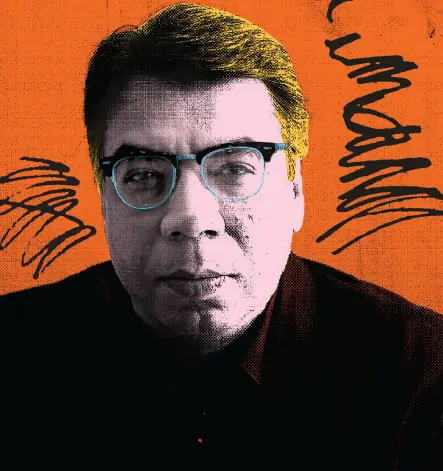
The writer is a former judge of the Supreme Court of Pakistan.
Published in Dawn, June 28th, 2026





 English (US) ·