
.png)
 12 hours ago
2
12 hours ago
2
ARTICLE AD BOX
PM Shehbaz states there will be immediate, permanent termination of military operations on all fronts
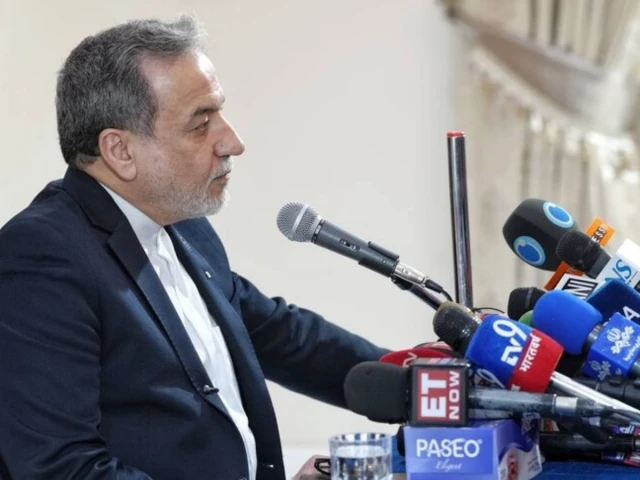
Iranian Foreign Minister Abbas Araghchi. PHOTO: ANADOLU AGENCY
Iran’s foreign minister said Monday that the US bears the responsibility for implementing the Pakistan-mediated memorandum of understanding with Tehran, calling for the Israeli attacks on Lebanon to stop. This came during Abbas Araghchi's separate phone calls with Iraqi Foreign Minister Fuad Hussein, Egyptian Foreign Minister Badr Abdelatty, and Saudi Foreign Minister Prince Faisal bin Farhan, according to Iran’s state news agency IRNA. Araghchi and his counterparts also stressed the need to maintain diplomatic efforts to achieve stability and security in the region, the outlet added. US, Iran reach preliminary agreement to end war, signing set for Friday US and Iranian officials said they had agreed on a framework to end their war, halt the US blockade of Iran and reopen the Strait of Hormuz, a preliminary pact that sent oil prices falling but leaves the fate of Iran's nuclear program to further negotiations. "The Deal with the Islamic Republic of Iran is now complete," US President Donald Trump wrote on his Truth Social platform around 5:30pm ET local time in Washington (1:30am PKT) on Sunday. His post came shortly after Prime Minister Shehbaz Sharif, whose country has served as a mediator, announced a deal had been struck early on Monday local time. The memorandum of understanding is scheduled to be officially signed on Friday in Switzerland. The precise terms were not immediately known. Sharif said in a post on X that the pact called for "the immediate and permanent termination of military operations on all fronts, including in Lebanon." Following intensive talks, we are pleased to announce that the Peace Deal between the United States of America and Islamic Republic of Iran has been REACHED. Both sides have declared the immediate and permanent termination of military operations on all fronts, including in… Read: Trump announces completion of Iran deal, removes US blockade of Strait of Hormuz Lebanon has been a sticking point in negotiations, with Israel and Hezbollah ignoring calls from Trump and others to stop their attacks on each other in recent weeks. In a statement, the secretariat of Iran's Supreme National Security Council said war and military operations on all fronts, including Lebanon, would end permanently starting on Monday night. Iran's deputy foreign minister, Kazem Gharibabadi, said a more expansive agreement would be negotiated during a 60-day ceasefire period, including sanctions relief for Iran. The fate of Iran's nuclear program will also be addressed in those later talks, sources previously told Reuters. There was no immediate reaction to the announcement from Israel, which has said it was not party to the US-Iran talks. Israel says its army to remain in areas it occupied in southern Lebanon despite US-Iran deal Israeli Defense Minister Israel Katz said Monday that the Israeli army will remain in the areas it occupied in southern Lebanon as well as in Syria, and Gaza despite a peace agreement between the US and Iran. Israel opposes the withdrawal of its forces from Lebanon "despite all current and future pressures," he said in a statement. He added that areas occupied by Israel in southern Lebanon would be “cleared” of the local population. Katz also claimed that Israeli Prime Minister Benjamin Netanyahu had made this position clear to US President Donald Trump and other senior American officials. "I also clearly conveyed this to US Defence Secretary Pete Hegseth," Katz added. The Israeli minister warned that Israel would attack Iran “with all our might” if Tehran launched strikes against Israel because of developments in Lebanon. Israeli National Security Minister Itamar Ben-Gvir also criticised the US-Iran deal, claiming that “Trump’s agreement does not bind" Tel Aviv. ההסכם של טראמפ אינו מחייב אותנו. ישראל לא כפופה לארצות הברית ואנחנו מדינה עצמאית וריבונית!
חובתנו לאזרחי ישראל לחיילי צה״ל ולעם היהודי וחובתנו ההיסטורית לנרדפים ולנרצחים היהודים באלפי שנות גלות, להעניק ביטחון ליהודים בארץ ישראל.
בכל פעם שנכנענו ללחץ בינלאומי על חשבון ביטחון… China urges swift reopening of Strait of Hormuz after US-Iran deal China on Monday called for the Strait of Hormuz to reopen as soon as possible after the United States and Iran reached an initial peace agreement. "The Strait of Hormuz is an important strait for international passage," Chinese Foreign Ministry spokesman Lin Jian told reporters in Beijing. "We hope the strait can resume opening as soon as possible," he said. Lin also welcomed the agreement reached between Washington and Tehran and praised Pakistan's role in mediating the negotiations. "China welcomes US and Iran reaching the agreement on text of an initial memorandum of understanding and commends Pakistan's mediation efforts," he said in response to a question from an Anadolu correspondent. "We hope the documents will be signed as planned and all relevant parties will stay committed to peaceful solutions," he added. Washington appreciates Turkish president's support for regional de-escalation, says US envoy US Ambassador to Türkiye Tom Barrack said on Monday that Washington appreciates Turkish President Recep Tayyip Erdogan’s support for diplomatic efforts and de-escalation in the region. "We appreciate President Erdogan’s support for diplomacy and regional de-escalation,” he said on US social media platform X. "Progress is possible when nations choose dialogue, partnership, and a shared commitment to peace and security," he added, quoting a post by Erdogan welcoming the recently announced US-Iran deal. Egypt, Jordan welcome US-Iran agreement, call it ‘important step’ for regional stability Egypt and Jordan on Monday hailed a peace agreement between the United States and Iran as “a highly important development” for restoring security and stability in the region. In a statement, the Egyptian Foreign Ministry voiced hope the agreement will mark “a major turning point” toward strengthening mutual trust, laying new foundations for cooperation and “creating an environment that supports peace and diplomatic efforts to address various regional issues, in a way that reflects positively on security and stability in the Middle East.” Cairo said that it had continued diplomatic efforts in recent months, in coordination with its regional and international partners, to end the war and open a new chapter that strengthens regional security and stability. It renewed its support for peaceful solutions and the settlement of disputes through dialogue and negotiation as “a basic approach for achieving peace and consolidating stability in line with international law and the UN Charter.” It also voiced hope that ending the war will help refocus international attention on the humanitarian and security conditions in the Gaza Strip and the West Bank, and speed up the start of the second phase of Trump’s plan to end the war in Gaza. Jordan’s Foreign Ministry also welcomed the agreement, saying it was an important step toward restoring regional and international security and stability. رحّب الأردن اليوم بالتوصل إلى اتفاق بين الولايات المتحدة الأمريكية والجمهورية الإسلامية الإيرانية لإنهاء العمليات العسكربة وبدء مفاوضات تفصيلية بهدف التوصل إلى اتفاق دائم، خطوة هامة لاستعادة الأمن والاستقرار الإقليميين والدوليين.
وأعربت وزارة الخارجية وشؤون المغتربين في بيانٍ عن… pic.twitter.com/itB5y5mjSg It stressed the importance of reaching a permanent agreement “that consolidates security and stability in the region, takes into account the security interests of countries in the region, and upholds the principles of good neighbourliness, respect for state sovereignty and noninterference in internal affairs.” Jordan renewed its support for settling disputes through diplomatic means in accordance with international law and the UN Charter, as well as all regional and international efforts aimed at achieving security, stability and prosperity for the peoples of the region and the world. Key provisions in Iran-US draft memorandum of understanding according to Iranian media Iranian media published details Monday of a 14-point draft memorandum of understanding between Iran and the US laying out a proposed framework to end the war and move toward a final agreement. The semi-official Mehr News Agency said the draft calls for an immediate and permanent halt to the war on all fronts, including Lebanon, the lifting of the US naval blockade against Iran, the reopening of the Strait of Hormuz and a 60-day negotiation period covering nuclear issues and sanctions relief. The reported draft comes after Iran said the memorandum of understanding had been finalised and would be formally signed Friday in Geneva. End of war, US commitments According to Mehr, the draft calls for an immediate and permanent end to the war on all fronts, including Lebanon. It also includes a US commitment not to interfere in Iran’s internal affairs and to respect the sovereignty of the Islamic Republic. The draft further requires the US to withdraw its forces from around Iran and refrain from deploying additional troops to the region or imposing new sanctions during the negotiation period. Hormuz reopening, blockade lifting The draft provides for the full lifting of the US naval blockade against Iran within 30 days. It also calls for reopening the Strait of Hormuz within 30 days under Iranian arrangements. Mehr said the draft includes a monitoring mechanism to oversee implementation of the agreement. Sanctions relief, frozen assets The draft provides for the suspension of sanctions on Iranian oil sales, petrochemical products and derivatives while granting Tehran full access to the financial proceeds. It also calls for the release of $24 billion in frozen Iranian assets during the 60-day negotiations period, with half of the amount to be made available to Iran before the start of final talks. According to the draft reported by Mehr, the final agreement would include the full lifting of US primary and secondary sanctions as well as the termination of relevant UN Security Council and International Atomic Energy Agency Board of Governors resolutions. Nuclear talks, Iranian red lines The draft sets a 60-day negotiation period to reach a final agreement focused on nuclear issues and sanctions relief. It says Iran would reiterate its commitment under the Nuclear Non-Proliferation Treaty (NPT) not to produce nuclear weapons. Mehr said the final negotiations would focus only on the fate of enriched material and enrichment activities, sanctions relief and the reconstruction of Iran’s economy. The report added that Iran’s missile program and support for resistance groups were “definitively” excluded from the final negotiation agenda. Reconstruction plans, final agreement The draft requires the US and its allies to present reconstruction plans for Iran worth at least $300 billion. It also says the final agreement would be endorsed through a UN Security Council resolution. Mehr reported that final negotiations would not begin before half of Iran’s frozen assets are released, sanctions on Iranian oil are suspended and the naval blockade is lifted. Last-minute changes Separately, Tasnim News Agency, citing an informed source, said late changes were introduced to the draft during the final hours of negotiations, including provisions related to administration of the Strait of Hormuz. The source added that guarantees related to Lebanon’s sovereignty and territorial integrity were also included at the final stage and played a role in Iran not carrying out a planned response to Israeli strikes on Beirut’s southern suburbs. Strait to reopen Trump said the Strait of Hormuz, a major shipping route for global oil and gas supplies that Iran has effectively shut down for months, would open on Friday, and that he had ordered the end of the US blockade of Iranian ports. "Ships of the World, start your engines. Let the oil flow!" Trump wrote, along with "oil will flow on both ends again for the Region, and the World!" Oil prices fell on the news. Brent crude futures fell 4% in early trading on Monday, while US West Texas Intermediate slid more than 4.6%. Stock markets in Asia jumped. Former Biden administration State Department spokesperson Matthew Miller said Trump had made important concessions to Iran to achieve the status quo that existed before he launched the war. "We have no assurances the nuclear program will ever be addressed, but Iran has shown the world it can take the global economy hostage and get something from the US in return," said Miller. Thousands of people have been killed, mostly in Iran and Lebanon, since US and Israeli forces first attacked Iran on February 28. Iran has struck Israel and Gulf states hosting US bases and has effectively blockaded the Strait of Hormuz, pushing up global energy prices. US forces have blocked Iranian ports in response. Read more: UN Chief condemns new Israeli strikes on Lebanon The Iran war has become a political liability at home for Trump and his fellow Republicans in Congress, with public opinion polls showing Americans deeply frustrated by rising gas prices ahead of November's midterm elections. But Trump has also faced pressure from members of his own party who insist that Iran's nuclear program must be completely shut down. Republican Senator Lindsey Graham, a leading Iran hawk, praised the deal but said he would be "watching closely" the coming negotiations on Iran's nuclear program. "Under our law, any nuclear deal with Iran will be sent to Congress for review and a vote," he said. "Congratulations to all in getting us to this point." During his first term, Trump withdrew the US from a 2015 multilateral Iran deal, negotiated by Democratic President Barack Obama, that lifted sanctions on Tehran in exchange for limits on its nuclear program, including international inspections. Iran responded by ramping up its enrichment of uranium, producing more than 400 kg (around 900 pounds) of material at close to bomb-grade purity. The eventual fate of that uranium is likely to be a key negotiating point during the upcoming talks. 'A very difficult guy' The agreement was sealed despite an Israeli strike on Lebanon on Sunday that had blowback from both Iran and Trump. Israeli Prime Minister Benjamin Netanyahu has differed with Trump over American demands that Israel curb its military action in Lebanon to allow the United States to reach a deal with Iran. Israel has said it will retain freedom of operations in Lebanon, while Iran has made a full ceasefire there an important component of its demands. Trump updated Netanyahu on the progress toward a peace deal during a phone call on Sunday, Israel's N12 reported, citing a senior official. In an interview with the New York Times, Trump called Netanyahu "a very difficult guy" and argued the Israeli leader should thank him for saving Israel from a nuclear-armed Iran. Leaders outside the Middle East, who have kept a wary eye on the conflict, welcomed the announcement. In a joint statement, the United Kingdom, Germany, France and Italy said they were prepared to lift sanctions on Iran in response to "clear, verifiable steps" to limit its nuclear program. "We are clear that toll-free freedom of navigation must now be restored in the Strait of Hormuz," British Prime Minister Keir Starmer said. "Iran must never have a nuclear weapon." Before the deal was announced, a senior Iranian official told Reuters that, under the terms of the draft, the United States would agree to release $25 billion of frozen Iranian assets. The Trump administration has previously said any release of Iranian money would only take place once Iran has fulfilled certain conditions under a peace deal. A US official, also speaking before the announcement, said the agreement would ultimately lead to the dismantling of Iran's nuclear program, with its stockpile of highly enriched uranium to be destroyed and removed. The senior Iranian official said the draft deal would allow Iran, which denies seeking a nuclear bomb, to dilute its enriched uranium inside the country.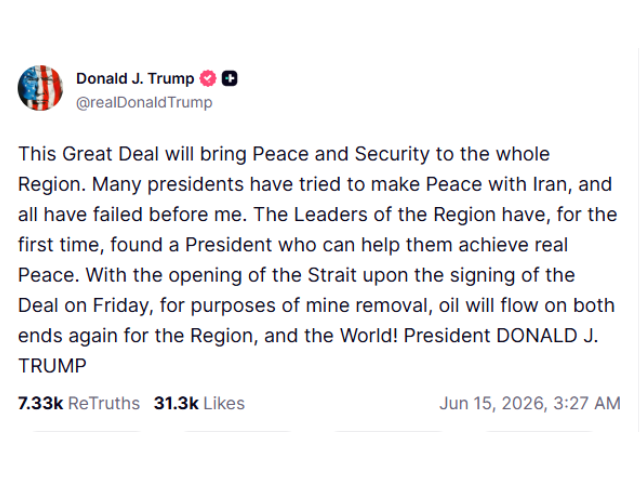




 English (US) ·