
.png)
 1 hour ago
4
1 hour ago
4
ARTICLE AD BOX
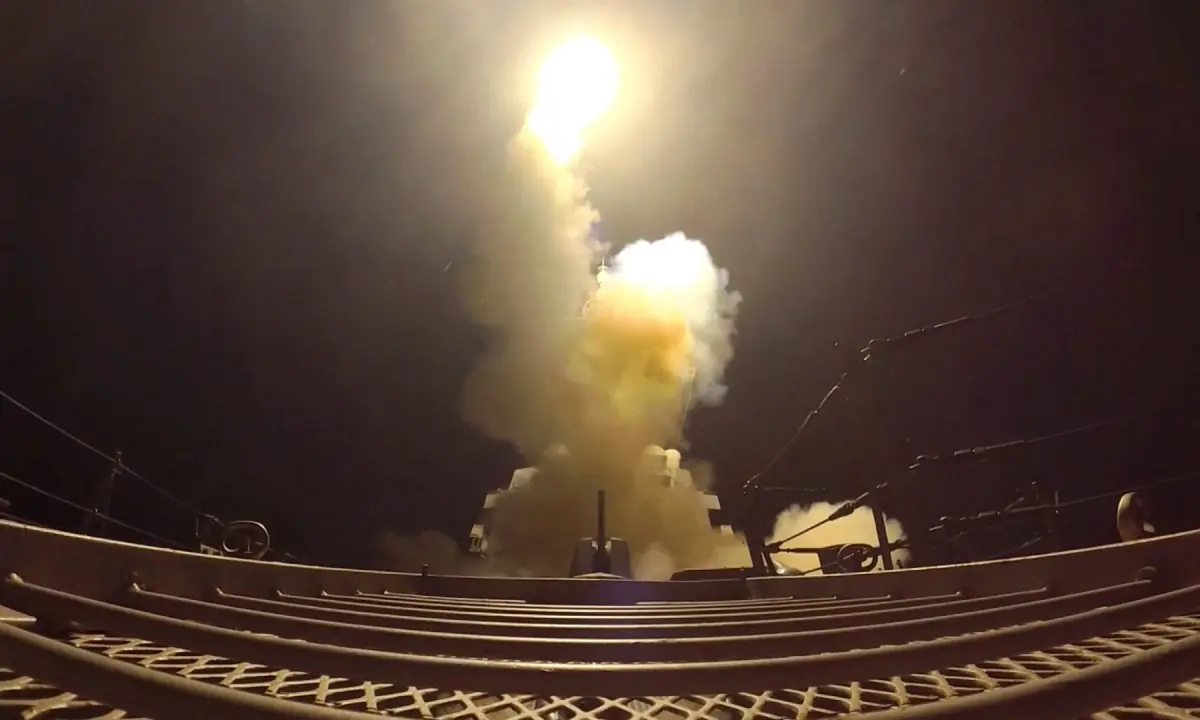
Oil prices surged more than three per cent on Monday after renewed military strikes between the United States and Iran reignited concerns over energy shipments through the Strait of Hormuz.
Brent crude futures were up $2.47, or 3.25pc, to $78.48 at 4:45pm PKT, while US West Texas Intermediate crude was up $2.35, or 3.29pc, to $73.76 a barrel.
“The focus will remain on the number of inbound tankers as a lower number could impact production, so currently we see a risk premium but as well a disruption risk supporting prices,” said UBS analyst Giovanni Staunovo.
Fresh US and Iranian strikes over the weekend fueled fears of a renewed escalation. Tehran targeted US facilities across the Gulf on Sunday and said it had again closed the Strait of Hormuz.
Iran’s Revolutionary Guards said on Monday they had attacked US military bases in Kuwait and Bahrain.
Some 20pc of the world’s oil and liquefied natural gas transited the strait before the war began at the end of February.
“Shipping operators are adopting a cautious approach and inbound movements have slowed under heightening security concerns,” ANZ analysts said.
Vessel traffic through the strait fell to a five-week low on Sunday, ship-tracking data showed. Six vessels transited the strait on Sunday, according to Kpler.
The escalating attacks cast further doubt on the future of an interim US-Iranian agreement signed last month that aimed to reopen the strait and end the war after a further 60 days of negotiations.
Following the agreement, global oil supply rose by 4.1 million barrels per day in June, but remained 9.4m bpd below pre-war levels, the International Energy Agency said in its monthly report on Friday.
US President Donald Trump said on Sunday that the Strait of Hormuz was open to commercial traffic, although Iran declared earlier that it had closed the strait after a vessel had travelled on an unapproved route and was struck.
Goldman Sachs estimated that expanding pipeline capacity in the Middle East could shield more than 60pc of pre-war Gulf oil exports from any future Hormuz disruptions by end-2028.
The bank’s base-case forecast assumes pipeline capacity bypassing Hormuz will rise by 3.8m bpd by end-2027 and 7.3m bpd cumulatively by end-2028, taking total effective bypass capacity to more than 14m bpd by end-2028.
Iranian oil supplies held at sea are rising after Tehran boosted exports during the interim peace deal with the US. However, sales have been slow as China’s independent refiners have turned to cheaper crude from Iraq, the UAE and Qatar.
The Abu Dhabi National Oil Company (Adnoc) set the August official selling price of its benchmark Murban crude at $80.01 a barrel, it said on Monday, down from $101.48 a barrel the month before.
Elsewhere, Ukraine’s Security Service said it struck an oil depot in Russia’s Stavropol region overnight, as well as three storage tanks at an oil-loading site in the port of Kavkaz in the southern Russian region of Krasnodar.
Follow Dawn Business on X, LinkedIn, Instagram and Facebook for insights on business, finance and tech from Pakistan and across the world.





 English (US) ·