
.png)
 17 hours ago
1
17 hours ago
1
ARTICLE AD BOX
Repeated price revisions threaten $6b refinery investment, industry warns
ISLAMABAD:
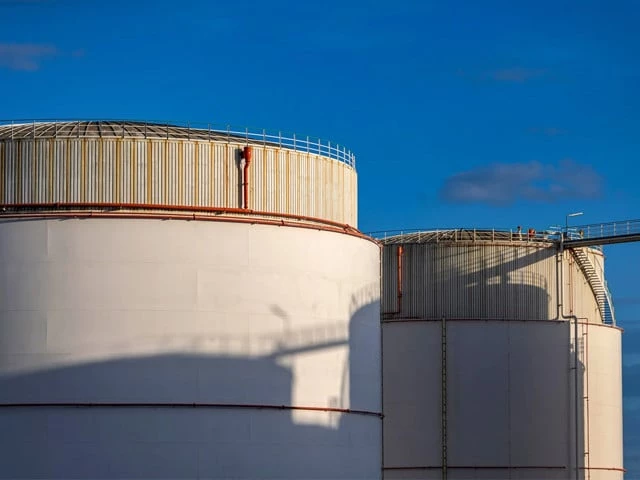
Pakistan has failed to attract foreign oil suppliers to set up bonded oil storages due to issues in a 2023 policy, sources told The Express Tribune. The government is now amending the policy to create a favourable environment for foreign suppliers. The Iran-US war exposed Pakistan to oil shortages when Iran closed the Strait of Hormuz, through which Pakistan's entire oil supplies pass. Saudi Arabia, the UAE and Kuwait are key suppliers. Pakistan is the only country in the region without strategic reserves, while India has reserves established by the UAE. Petroleum Minister Ali Pervaiz Malik contacted all oil-producing countries to invite them to set up storages. Kuwait was the first to show interest. Under the new policy, the government will have first right to use oil reserves managed by foreign suppliers, but suppliers will also be allowed to export oil from those reserves. Sources said Pakistan had allocated land to the UAE for a Khalifa oil refinery and storages, but the UAE did not build those reserves. Pakistan is now looking towards Saudi Arabia, Kuwait and Qatar to build storages for oil and gas. Earlier, the government mulled a plan to build gas storages in depleted fields, but no progress was made. During the war, Pakistan also faced severe gas shortages when Qatar stopped supplying LNG due to the closure of the Strait of Hormuz. The petroleum division briefed the Economic Coordination Committee (ECC) on the import of foreign suppliers' accounts through custom bonded storage facilities, approved on June 26, 2023. However, no foreign supplier has established bonded storage under the policy. The ECC was informed that the vulnerability of the country's energy security was exposed during the Strait of Hormuz disruption. To mitigate the challenge, the petroleum division is focusing on developing key pillars of energy security, including indigenisation and strategic petroleum storages. The minister constituted a committee on May 7, 2026, to review the existing policy and suggest recommendations. The committee held multiple meetings and sought input from major petroleum traders. A draft amended policy has been developed for approval and circulated to multiple ministries for comments. Pricing dispute threatens investment Amid a major dispute over repeated changes in the petrol pricing formula, the oil industry has warned that it would choke the $6 billion investment planned in refinery upgradation projects. Repeated changes in oil pricing and economic policies could push investors away. During the last revision, the government changed the oil pricing formula, pushing the burden of Rs46 per litre on diesel and Rs11 per litre on petrol, causing over Rs100 billion in losses for refineries. A major dispute has erupted between Pakistan's oil industry and regulators, with leading oil marketing companies (OMCs) and refineries accusing OGRA of repeatedly changing the petroleum pricing formula and using flawed calculations. Industry sources claim the cumulative impact of disputed calculations relating to international product premiums and Platts benchmark price averages has reached nearly Rs75 per litre on diesel and Rs35 per litre on petrol over the past month – losses absorbed by the supply chain rather than reflected in consumer prices. The controversy has intensified over the past two to three months, during which the government and OGRA have revised the pricing methodology multiple times, unsettling investors. The sharpest grievances centre on the past four weeks, during which industry representatives allege OGRA did not fully incorporate the impact of both international product premiums and Platts benchmark averages. "The numbers are not in dispute," a senior industry executive said. "When the correct premium and Platts average figures are applied, the outcome is materially different. The issue is whether the same methodology is applied consistently." Frustration reached a boiling point when chief executives of major oil sector companies held a high-level meeting with Petroleum Minister Ali Pervaiz Malik and Secretary Petroleum Hamed Yaqoob to seek immediate intervention. Sources said companies challenged OGRA's methodology, arguing the regulator had used disputed calculations relating to both international product premiums and Platts benchmark averages. Industry representatives contended that the application of these figures had distorted recoveries, created pricing mismatches and exposed both OMCs and refineries to significant losses. "The core issue is consistency," another senior executive said. "One formula is applied when prices move in one direction and another interpretation emerges when prices move in the opposite direction. The industry cannot operate on shifting goalposts." Beyond the pricing formula dispute, OMCs raised a separate concern: a significant backlog of Price Differential Claims (PDC) payments stuck at OGRA that is creating acute liquidity stress. Each attempt to engage the regulator directly was met with new procedural requirements, effectively delaying payments. Malik pushed back on the PDC characterisation, stating that his ministry had released funds to OGRA in a timely manner and that responsibility for disbursing payments now rested with the regulator. He assured the delegation that he would write to OGRA to expedite the release of pending claims. "The funds are apparently available, but access to those funds has become increasingly difficult," one executive said. The issue has also alarmed foreign investors who have recently entered Pakistan's downstream oil sector. Executives conveyed grave concerns over frequent changes in the pricing mechanism, warning that policy uncertainty was eroding investor confidence at a time when Pakistan is actively courting foreign investment. Industry officials cautioned that the problem extends beyond private-sector concerns, noting that state-owned OMCs and refineries collectively account for nearly 50% of the country's petroleum market and have also suffered substantial losses. "This is not just a private-sector problem," one participant said. "When government-owned entities incur losses, the burden ultimately falls on the national exchequer." During the meeting, the minister informed the delegation that Prime Minister Shehbaz Sharif has constituted a committee to review the petroleum pricing mechanism and recommend a sustainable way forward. The minister assured industry representatives that the government intends to adopt a consistent pricing methodology applied uniformly during both upward and downward price revisions. Industry executives warned that continued uncertainty could discourage future investment in storage infrastructure, refinery upgrades and fuel supply networks – areas where the government has been seeking fresh capital. Analysts say the latest standoff highlights growing tensions between regulators and the petroleum industry over pricing transparency.






 English (US) ·