
.png)
 15 hours ago
1
15 hours ago
1
ARTICLE AD BOX
Bilawal addresses a massive public rally in Gilgit; vows to ensure ownership rights
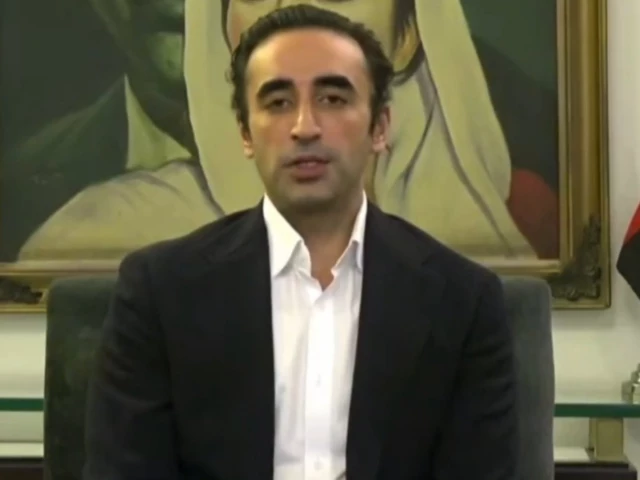
Pakistan Peoples Party (PPP) Chairman Bilawal Bhutto Zardari. SCREENGRAB
LAHORE:
As electioneering concluded in Gilgit-Baltistan on Friday, the Pakistan Peoples Party appeared poised to enter the June 7 polls as the strongest contender. "The commission informs the public, political parties, candidates and their supporters that under Section 182 of the Elections Act 2017 and the Code of Conduct, no election-related activities will be allowed during the 48 hours preceding polling," said the statement by the Gilgit-Baltistan Election Commission's public affairs wing. According to the law, no person would be permitted to organise, attend, promote or support any public meeting, rally, procession or gathering within the relevant constituency during this period, the statement added. "In this regard, a complete ban on all election activities will come into effect from 12 midnight on June 5, 2026," the press release said. PPP Chairman Bilawal-Bhutto Zardari addressed a massive public rally at the Aga Khan Polo Ground in Gilgit on the final day of campaigning. Attended by thousands of supporters from across the region, the gathering marked the party's last major show of strength before polling day and bolstered perceptions that the PPP has emerged as the frontrunner in the electoral race. Bilawal was accompanied by First Lady Aseefa Bhutto Zardari, whose prominent role throughout the campaign added to the significance of the event. Her active participation on the campaign trail has been widely seen as a formal entry into frontline politics alongside the PPP chairman, signaling an increasingly visible role in the party's leadership and future direction. The election campaign also unfolded in a politically uneven environment. While the PPP maintained a sustained and highly visible presence across Gilgit-Baltistan, the PTI's central leadership was largely absent from the campaign trail. PTI leaders alleged that the party faced restrictions on holding rallies and public meetings, hampering its ability to campaign freely. The conditions tilted the electoral contest in favour of the traditional mainstream parties, particularly the PPP and PML-N, which emerged as the dominant players in the campaign. The Istehkam-e-Pakistan Party (IPP) was the newest entrant to the political landscape, launching its campaign in the region about 10 weeks before the elections. Taking advantage of the reduced political space for the PTI, the party managed to recruit several prominent political heavyweights and quickly establish a presence in the contest. Led by Federal Minister for Communications Abdul Aleem Khan, the IPP sought to attract voters with pledges of infrastructure development, expressing confidence that its development-focused agenda would translate into seats in the assembly. The PPP was further aided by dissatisfaction among sections of the electorate with the PML-N-led government over its response to protests that turned deadly in the wake of the killing of Iran's supreme leader. Political observers believe the situation enabled the PPP to shape much of the campaign narrative ahead of polling day. Addressing the charged crowd, Bilawal recounted his extensive outreach in Gilgit-Baltistan during previous elections, noting that he had spent an entire month travelling across the region and visiting every tehsil to present the PPP manifesto. He maintained that, despite widespread public support, the party was deprived of the opportunity to fully benefit from its mandate. "This time, we will not allow injustice to prevail," Bilawal told supporters, urging them to remain vigilant and ensure the protection of their votes throughout the electoral process. He also pledged to protect the 18th Constitutional Amendment for the people of Gilgit-Baltistan. It is worth mentioning that PPP leaders have consistently framed the party as the principal defender of Gilgit-Baltistan's constitutional, economic, and political rights throughout the campaign. At Friday's rally, Bilawal repeatedly emphasised three pillars of the party's vision for the region: the right to ownership, the right to self-rule, the right to employment and financial protection as envisaged under the 18th Constitutional Amendment. The PPP chairman argued that his party alone possessed both the political will and the national influence necessary to secure these objectives.





 English (US) ·