
.png)
 1 month ago
28
1 month ago
28
ARTICLE AD BOX
Sustained high-level engagement between Vladimir Putin and Masoud Pezeshkian continues to reflect the resilience of bilateral ties with both leaders holding three telephone conversations in the aftermath of recent US and Israeli military actions against Iran.
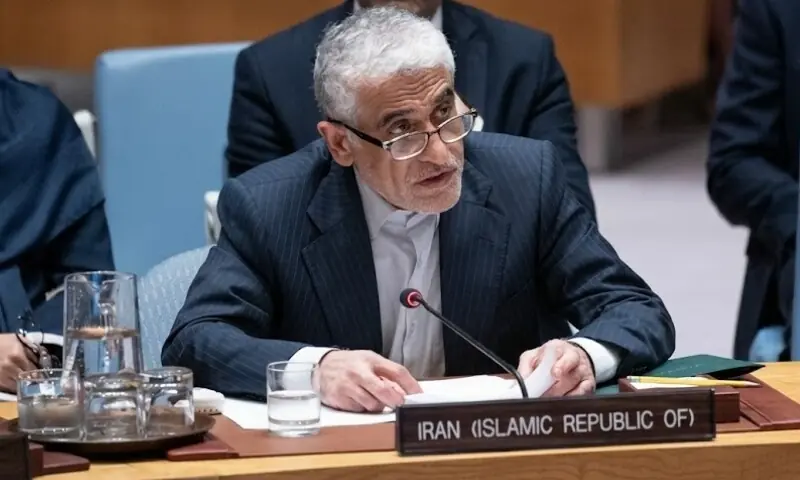
Addressing journalists in Moscow, Iran’s Ambassador Kazem Jalali stated that political coordination between Moscow and Tehran remains active across key international platforms.
He emphasized that direct communication between the two presidents remains strong and consistent, underscoring a stable and strategic partnership despite heightened regional tensions.
The envoy also highlighted the effective diplomatic engagement between Sergey Lavrov and Abbas Araghchi, noting that their continued coordination is playing a central role in deepening bilateral cooperation and aligning policy responses.
According to Jalali, the current escalation in tensions stems from a large-scale military operation launched by the United States and Israel against Iran on February 28, which significantly intensified instability in the region.
On April 7, Donald Trump announced a two-week ceasefire with- Tehran as part of efforts to contain the crisis. However despite several rounds of negotiations both sides have yet to reach a durable or comprehensive agreement.
Iranian officials have reported significant casualties during the 40-day conflict, stating that approximately 3,375 Iranian citizens lost their lives in strikes carried out by US and Israeli forces.
On April 21, President Trump indicated the possibility of extending the ceasefire. Nevertheless, Iranian state media signaled that Tehran is unlikely to accept any unilateral extension, reiterating that its decisions will be guided by national interests and strategic priorities.
The evolving situation highlights a complex diplomatic environment, where ongoing dialogue between key stakeholders continues alongside unresolved tensions and shifting geopolitical dynamics.




 English (US) ·