
.png)
 1 day ago
4
1 day ago
4
ARTICLE AD BOX
Oscar-winning director criticises modern filmmaking, calling recent output 'pandering, miscast and creatively bankrup
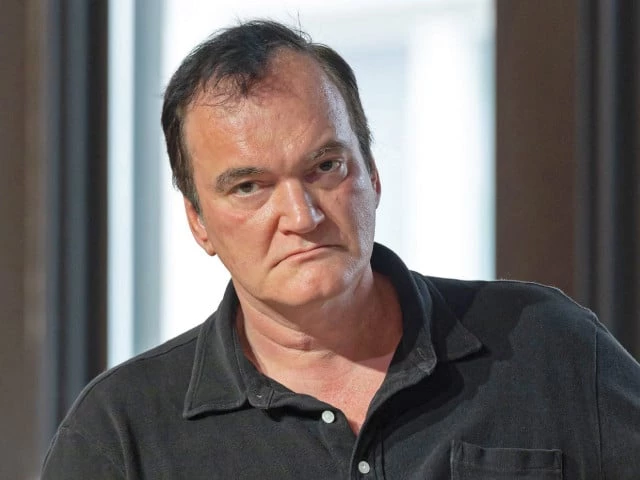
Photo: The Guardian
Quentin Tarantino has launched a scathing attack on contemporary Hollywood, describing the modern film industry as a "flavourless sausage factory" where miscasting, audience pandering and plain stupidity routinely undermine new releases and erode the craft of cinema. In a candid essay written for Sight & Sound magazine, the Oscar-winning filmmaker, known for his uncompromising views on cinema, said it had become "almost impossible" for him to watch a new movie without mentally dismantling it. The director argued that recent years have marked a sharp decline in the overall quality and ambition of mainstream filmmaking. "Flaws, implausibilities, audience pandering, miscast performers or just plain stupid s*** usually torpedoes every new movie coming out of the flavourless sausage factory that used to call itself Hollywood," he wrote. He went further, suggesting that modern films rarely inspire admiration or even neutrality. Instead, he said, they increasingly provoke "contempt rather than generosity", adding that his frustration has grown particularly in the post-pandemic era. According to him, the experience of watching new releases has changed so drastically that he now often prefers reading a book instead of going to the cinema. Tarantino acknowledged that his relationship with cinema in earlier decades was more forgiving, even during what he described as the uneven output of the 1980s. However, he said that period still allowed him to enjoy going to the movies, something he feels has largely disappeared in the current landscape. By contrast, he argued that today's industry struggles to produce films that fully engage him. "I've seen movies I liked since then – 'West Side Story' (2021); 'Horizon: An American Saga' Chapter 1 and 2 (2024), a few others – but nothing that really held me in its grip and swept me away to the magical land of enjoyment." Despite his criticism, Tarantino did single out one recent production that managed to impress him. He praised 'The Rip', a crime thriller directed by Joe Carnahan and starring Ben Affleck and Matt Damon, calling it a rare example of a contemporary film that "grabbed" and sustained his interest throughout. He commended the film's direction, ensemble cast and cinematography, but reserved particular praise for its screenplay, describing it as the strongest element of the production. The film, which follows two Miami-Dade police officers uncovering corruption linked to cartel money, also features Steven Yeun, Teyana Taylor, Sasha Calle and Kyle Chandler. Tarantino's remarks come at a time when he remains a dominant but increasingly selective voice in global cinema. His most recent film, 'Once Upon a Time… in Hollywood' (2019), was followed by a novel adaptation and ongoing speculation about his final feature project. Beyond filmmaking, the director is currently developing a stage play titled 'The Popinjay Cavalier', described as a swashbuckling comedy set in 1930s Europe. The production is scheduled to premiere in London's West End in 2027. Tarantino had previously announced plans to retire after his 10th film, but later abandoned the project titled 'The Movie Critic', leaving the future of his final cinematic outing uncertain. For now, however, his attention appears firmly fixed on critiquing an industry he believes has lost its way. Tarantino's remarks have once again placed him at the centre of a long-running debate about Hollywood's creative direction, where commercial pressures and franchise-driven storytelling have increasingly shaped studio output. His comments, though characteristically blunt, echo concerns often raised by filmmakers and critics who argue that originality has been squeezed by risk-averse production models and algorithm-driven audience targeting. At the same time, the industry has continued to point to strong box office performances and the global reach of streaming platforms as evidence that cinema is evolving rather than declining. Big-budget franchises, superhero films and streaming originals continue to dominate viewership charts, even as debates persist over artistic depth versus commercial appeal. His critique also reflects a broader generational divide in filmmaking perspectives, with auteurs from earlier eras often contrasting their cinema-going experiences with today's multiplex and digital-first landscape. While some industry voices dismiss such criticism as nostalgia, others acknowledge that the scale and structure of modern production have fundamentally altered how films are developed, financed and consumed. Despite his sharp words, Tarantino remains an influential figure whose opinions continue to carry weight across the global film community. Whether embraced or disputed, his latest comments are likely to fuel further discussion about the balance between artistic ambition and commercial viability in contemporary Hollywood.







 English (US) ·