
.png)
 2 hours ago
3
2 hours ago
3
ARTICLE AD BOX
“My job is making windows where there were once walls” — Michel Foucault
HIV AIDS is a window to our health system. Instead of erecting mental walls of apathy and ignorance, the spread of HIV among children through our so-called healthcare system, helps us open a window through which the whole system can be revisited. Only if we are for windows and not walls.
After the Taunsa outbreak and incriminating BBC Eye documentary, the Punjab government first tried to defend itself and unnecessarily blamed the BBC for being misrepresentative and hyperbolic but then as the pressure mounted in the media by concerned citizens, the prime minister took notice and advised the Federal Ministry of National Health Services, Regulations and Coordination to set up a ‘Task Force on Reported HIV Mishandling’. This task force, ably chaired by the state minister of health, Dr Malik Mukhtar Ahmad Bharath, quickly convened experts and in three meetings (May 6, 8 and 14, 2026) produced a comprehensive report covering many governance, system, administrative as well as technical issues, and submitted it to the PM on May 21, 2026. Fast and commendable.
With several delays, including more than a month’s postponement, the PM called a hurried meeting on July 3, 2026, in which, reportedly, most of the recommendations were heeded and accepted and some decisions taken. Since then, there has been silence — no official minutes, no official decisions to move ahead.
Meanwhile, reports continue to come in about the growing number of children contracting the lethal virus at the hands of medical practitioners in some government health facilities. We barely know what’s going on in other government health facilities as the same practices prevail across the country, including in the private sector. The actual number of those infected is much higher than reported and will never be known.
The rise in HIV cases among children demands accountability at the policymaking level.
What is known however, through various national and international media reports, is that more and more children are being infected with HIV. At a government hospital in Karachi, at least 130 people, most of them children, have tested HIV positive. There are also reports from Hyderabad, Khairpur and other districts in Sindh. All such reports say ‘it is the tip of the iceberg’ — rightly so as the same conditions prevail across the country. Although some punitive actions are now being taken in Sindh, the issues are much deeper and systemic and reflect a general governance failure.
With one of the fastest-growing epidemics, Pakistan’s estimated HIV burden rose from about 67,000 cases in 2010 to roughly 210,000-240,000 by 2021-2022, a rise of about 213 to 258 per cent, while registered or diagnosed cases increased from over 6,000 in 2010 to about 84,421 by December 2025.
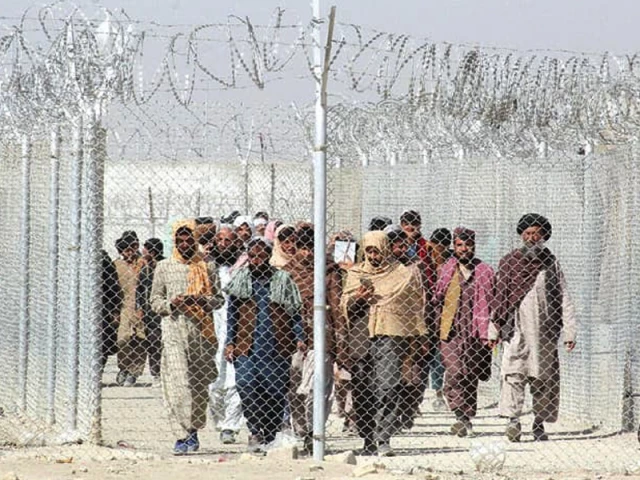
Mindful of systemic and specific technical issues, the task force made sweeping recommendations in eight priority areas: injection safety, stringent syringe regulation and prevention of transmission at the hands of health practitioners; strict regulation of unscreened blood transfusion; infection prevention and control measures including medical waste management; disease surveillance and gathering and collating real-time data by establishing a national HIV dashboard; spread of HIV among children and vulnerable populations; governance reforms, legal frameworks and accountability; public awareness and community engagement; and ensuring border health security and cross-agency coordination.
Among governance reforms and strengthening public health intelligence the task force has recommended “independent third-party evaluation of the National and Provincial AIDS Control Programmes (PACP)” and “development of interoperable data integration and referral mechanisms between ART (Antiretroviral Treatment) Centres, CDCs (Communicable Disease Control Directorates), PACPs, laboratories, and district surveillance systems”. These are important points to be implemented.
In governance, however, there are two very important but missing points in the task force recommendations. The first — political appointments in technical programmes with complete disregard to merit and frequent changes in staff. According to a report released in June 2025 by the Office of the Inspector General of Global Fund to Fight AIDS, Tuberculosis and Malaria (GF), the main financier of the HIV AIDS programme in Pakistan, during the last grant cycle of three years, the national coordinator of the Common Management Unit (CMU) was changed 10 times and the deputy national coordinator for HIV four times. Second, the report pointed out that hirings weren’t transparent and despite availability of funds from GF several key positions in the relevant programmes remained vacant throughout the grant period.
For a country with the fastest-growing HIV epidemic in Asia Pacific, South Asia and Eastern Mediterranean regions — now spreading into the general public especially among children — the state of our governance and financial commitment to people’s health is glaring: for the last five years, over 90pc of financing for HIV AIDS in Pakistan has come from the GF and there’s a fierce scramble for these funds. And yet, according to the most recent report of the auditor general of Pakistan, which has reviewed GF-supported programmes for HIV, TB and malaria implemented through CMU Pakistan that is under the federal health ministry, Pakistan failed to utilise more than Rs122 billion in GF assistance between 2015 and 2023 due to “administrative lapses, weak oversight and poor implementation”.
The AGP report says that Pakistan failed to secure an additional $22.9 million in GF support after officials did not submit the required integrated funding request for catalytic funding. And, there are a number of other incrementing sums of losses. Where’s the accountability for all this?
In around 10 recorded HIV outbreaks since 2009, there is hardly any accountability at any level. If at all, the axe falls on doctors at the lower end of the chain: recently 37 doctors were served notices at Valika Hospital in Karachi. Indeed, they should be made accountable for not following safe medical practices and for infecting children, but who will make accountable the policymakers who fail in their responsibilities, are found involved in malpractices and whose negligence impact populations — not just individuals. Policy negligence and regulatory failures have a much higher impact than individual cases of reusing infected syringes.
The government will be tested on how the highest office in the country ensures that the recommendations of the task force are implemented. Concerned citizens and media will be closely watching.
The writer is a former SAPM on health with ministerial status, adjunct professor of health systems and president of the Pakistan Association of Lifestyle Medicine.
Published in Dawn, July 24th, 2026






 English (US) ·