
.png)
 8 hours ago
1
8 hours ago
1
ARTICLE AD BOX
Agriculture, retail and real estate stay undertaxed while the salaried class and corporate sector carry the load
The tax we don't pay, the growth we don't get
KARACHI:
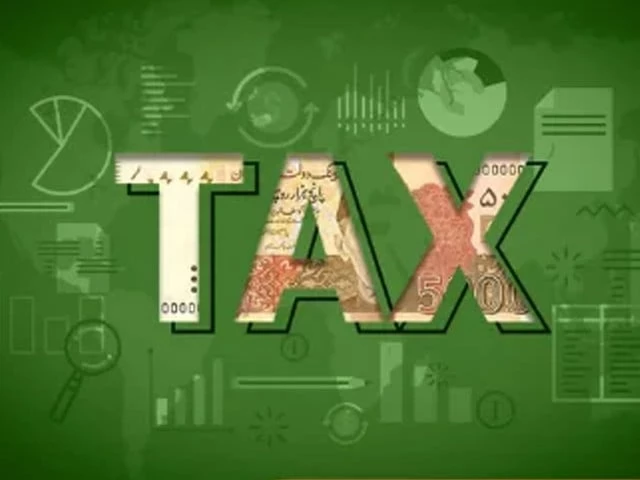
We often hear about the challenges Pakistan faces when it enters an International Monetary Fund (IMF) programme, yet we seldom spend enough time reflecting on our own structural shortcomings. It is always easier to criticise an external institution than to acknowledge the internal weaknesses that prevent us from achieving our full economic potential. To be fair, the current civil-military partnership has delivered several notable economic successes over the past two years. Inflation has fallen sharply from its peak, foreign exchange reserves have recovered, Pakistan's sovereign credit ratings have improved, the stock market has reached record highs, the exchange rate has remained relatively stable, remittances have surged, interest rates have declined significantly, and the fiscal deficit has narrowed considerably. Progress has also been made on long-pending reforms in areas such as state-owned enterprises, circular debt management, and the Pakistan International Airlines (PIA) privatisation process. These achievements deserve recognition. Yet one challenge continues to persist across governments, political parties and economic cycles: Pakistan's exceptionally low tax-to-GDP ratio. Despite record petroleum levies, super taxes, carbon levies, high corporate taxation, increased taxes on salaried individuals, withdrawal of exemptions and credits, and higher utility tariffs, the country still struggles to generate sufficient revenues. The problem is not merely that taxes are low; rather, too much of the burden continues to fall on the same documented segments of society while large parts of the economy remain outside the effective tax net. Agriculture remains one of the most frequently discussed examples. Successive governments have pledged to bring agricultural income into the tax system, and provincial legislatures have introduced various reforms. However, actual collection remains modest relative to the sector's economic contribution. Political realities play a role. Rural constituencies carry significant electoral importance, and many influential stakeholders have direct or indirect links to the agricultural economy. As a result, implementation often falls short of legislative intent. Instead of viewing agricultural taxation as a political liability, policymakers could gradually build consensus around fair and progressive taxation that protects small farmers while ensuring that large commercial operations contribute proportionately. A similar challenge exists within the wholesale, retail and trading sectors. These segments form the backbone of commerce and employment, yet documentation levels remain relatively low compared with their economic footprint. Governments frequently face resistance whenever new compliance measures are introduced because disruptions can quickly affect economic activity. However, the answer is not confrontation. The answer lies in simplifying tax procedures, reducing compliance costs, digitising transactions and creating incentives for voluntary documentation. Sustainable reform succeeds when taxpayers see fairness, transparency and value in participation. Real estate presents another structural issue. Property has long been regarded as a preferred store of wealth for households, investors and institutions alike. While real estate plays an important role in economic development, excessive concentration of capital in speculative land holdings can divert resources away from productive sectors that generate exports, innovation and employment. Large gains from land appreciation often occur with relatively limited economic activity attached to them. A more balanced approach could involve encouraging productive real estate development while gradually increasing taxation on idle high-value plots, improving valuation mechanisms and reducing distortions that favour speculative investment over productive enterprise. Under Pakistan's current IMF-supported programme, the country committed to significantly increasing its tax-to-GDP ratio over the medium term to 13.5%. According to official budget documents, tax revenues are expected to exceed Rs13 trillion this fiscal year. However, Pakistan's tax-to-GDP ratio remains around 10.5%, considerably below many emerging-market peers and well short of the levels required to sustainably finance development. Every percentage point improvement in the tax-to-GDP ratio translates into hundreds of billions of rupees that can be invested in water security, dams, renewable energy, modern transport infrastructure, education, healthcare, digital skills, judicial reforms, defence preparedness, nuclear submarines, stealth fighter jets and debt reduction. These are not abstract numbers; they directly influence the quality of life and future opportunities available to millions of Pakistanis. Perhaps the most overlooked consequence of a narrow tax base is the pressure it places on those who already comply. Pakistan's documented corporate sector and salaried class shoulder a disproportionately large share of the burden. When effective tax rates become excessively high, businesses naturally look for ways to reduce costs, delay expansion plans, shift capital into lower-risk assets or seek opportunities elsewhere. Entrepreneurs become more cautious, innovation slows, and productive investment suffers. If tax broadening efforts were more successful, policymakers would have greater room to gradually reduce tax rates on compliant sectors, making Pakistan more competitive, attracting investment, encouraging capital repatriation, supporting job creation and rewarding those who choose to remain within the formal economy. As Pakistan approaches what is effectively the final full-year budget cycle before the next general election, expectations of populist measures are understandable. Democracies naturally respond to political realities. Yet the country's long-term prosperity will depend less on temporary incentives and more on the difficult but necessary task of broadening the tax base fairly and consistently. The objective should not be to tax more people for the sake of taxation, but to create a system where the burden is shared more equitably, rates can gradually be reduced, compliance becomes easier, and economic growth becomes more inclusive. If Pakistan can complement its recent macroeconomic stabilisation with genuine tax broadening, it may finally move from repeatedly managing crises to sustainably building prosperity. THE WRITER IS AN INDEPENDENT ECONOMIC ANALYST

 English (US) ·