
.png)
 6 hours ago
2
6 hours ago
2
ARTICLE AD BOX
Performance, challenges, and road ahead for Pakistan's oil, gas exploration
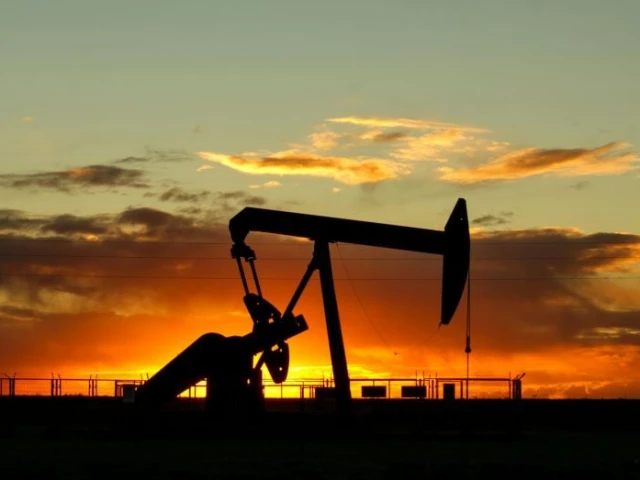
Oil and gas sector. Photo: File
KARACHI:
For more than six decades, Pakistan's exploration and production (E&P) companies have been tasked with discovering and developing domestic oil and gas reserves to meet the country's growing energy needs. Despite pockets of success, the sector's overall performance has fallen short of national requirements. Production has stagnated, discoveries have become smaller and less frequent, and Pakistan's dependence on imported energy has deepened. As the country confronts rising demand, dwindling reserves, and mounting foreign-exchange pressures, the urgency to rethink its exploration strategy has never been greater. Pakistan's E&P sector began with a strong momentum in the 1950s and 1960s, when early discoveries in Sui, Mari, and Badin laid the foundation for domestic gas supply. Through the 1980s and 1990s, companies such as OGDCL, PPL, and Mari Petroleum expanded exploration activity, adding fields in Sindh and Khyber-Pakhtunkhwa that helped fuel industrial growth and household consumption. However, the last 20 years tell a different story. While Pakistan has drilled hundreds of wells, the success ratio has remained modest, and the size of discoveries has steadily declined. Most recent finds have been small, marginal fields that do little to offset natural depletion in mature reservoirs. Gas production has seen a multi-year decline and is now at about 3 billion cubic feet per day (bcfd) – well below estimated demand for 5 to 6 bcfd. Oil production has fallen from a peak of about 100,000 barrels per day (bpd) in 2015 to about 70,000 bpd today. Several factors explain this trend: 1. Mature basins: Pakistan's traditional producing regions – particularly the Lower Indus Basin – have been heavily explored, leaving fewer large prospects. 2. Limited deep exploration: Deep and ultra-deep wells, which hold higher potential, remain underexplored due to cost, risk, and technical constraints. 3. Slow adoption of advanced technologies: Modern seismic imaging, reservoir modelling, and enhanced recovery techniques have not been deployed at the scale seen in other countries. 4. Regulatory and pricing constraints: Uncertain policies, slow approvals, and capped gas prices have discouraged aggressive exploration. Pakistan's inability to discover significant new reserves has forced the country to rely increasingly on imported LNG, petroleum products, and crude oil. This dependence has created several economic vulnerabilities: 1. Foreign exchange pressure: Energy imports consume billions of dollars annually, contributing to chronic balance-of-payments stress. 2. Exposure to global price volatility: Spikes in oil or LNG prices directly impact inflation, fiscal deficits, and industrial competitiveness. 3. Energy insecurity: Supply disruptions – whether due to geopolitical tensions or market shortages – pose risks to power generation and industry. Domestic exploration is not merely a technical challenge; it is a macroeconomic imperative. Exploration has been impeded mainly by structural and operational barriers. To understand what Pakistan's E&P companies must do next, it is essential to examine these barriers: Insufficient risk capital: Exploration, especially offshore, requires significant upfront investment with uncertain outcomes. Pakistan's E&P companies often operate with conservative budgets and limited risk appetite. Outdated geological models: Many exploration campaigns rely on legacy seismic data and older geological interpretations. Without modern imaging and modelling, companies may be missing deeper or unconventional prospects. Slow regulatory processes: Approval cycles for seismic surveys, drilling, and field development can be lengthy. Delays increase costs and reduce the attractiveness of exploration blocks. Limited international participation: Global oil majors, which bring advanced technology and deep pockets, have largely exited Pakistan due to pricing constraints, security concerns, and regulatory complexity. Underdeveloped offshore exploration: Pakistan's offshore basins, particularly the shallow offshore, remain largely unexplored. Past attempts have been inconclusive, but global experience shows offshore plays often require multiple drilling cycles before success. Given the limited success of recent decades, Pakistan's E&P companies must adopt a more aggressive, technologically advanced, and strategically coordinated approach. The following steps can help expedite the search for new oil and gas reserves. Accelerate offshore exploration in shallow waters: Pakistan's offshore basins are underexplored compared to regional peers. The government and E&P companies should re-launch offshore bidding rounds with competitive fiscal terms, offer risk-sharing incentives to attract global players, and conduct multi-client seismic surveys to improve data availability. Offshore exploration requires patience and multiple drilling attempts, but the potential rewards are significant. Pivot towards deep and ultra-deep exploration: Deep formations remain largely unexplored. Companies must invest in high-resolution 3D seismic surveys, deploy advanced drilling technologies, and partner with international service companies for deep-well expertise. Deep exploration is expensive, but it offers the highest probability of meaningful discoveries. Modernise geological and reservoir modelling: E&P companies must overhaul their technical capabilities, adopt AI-driven seismic interpretation, use machine learning for prospect ranking, and apply advanced reservoir simulation to improve recovery factors. Countries that embraced digital exploration have dramatically improved discovery rates. Enhance collaboration with international oil companies: Pakistan needs the capital, technology, and experience of global E&P firms. To attract them pricing policies must be market reflective, contract terms should be clear, stable, and competitive, and security and operational support must be strengthened. Joint ventures can accelerate exploration while reducing risk. Improve regulatory efficiency: A streamlined regulatory environment is essential for success. Pakistan should introduce single-window approvals, reduce bureaucratic delays in seismic and drilling permits, and ensure transparent and predictable policy frameworks. Faster approvals mean faster drilling - and faster discoveries. Focus on enhanced recovery from existing fields: While searching for new reserves, Pakistan must also maximise output from the existing ones. It must deploy enhanced oil recovery (EOR) techniques, including pressure maintenance, water flooding, and gas injection, and modernise field operations with digital monitoring systems. Improving recovery factors by even a few percentage points can add significant volumes. Build human capital and technical expertise: The E&P sector needs a new generation of geoscientists, reservoir engineers, and drilling specialists. Companies should invest in training programmes, collaborate with universities and global institutes, and encourage technology transfer through international partnerships. Human capital is the backbone of exploration success. E&P companies have worked diligently over the decades, but results have not kept pace with national needs. The era of easy discoveries is over; the future lies in offshore basins, deeper wells, advanced technology, and global partnerships. With the right strategy, Pakistan can still unlock new reserves, strengthen energy security, and reduce dependence on costly imports. The challenge is significant; so is the opportunity. The next decade will determine whether Pakistan can transform its exploration landscape or remain vulnerable to external energy shocks. The time for bold action is now. THE WRITER IS CHAIRMAN OF MUSTAQBIL PAKISTAN. HE HOLDS AN MBA FROM HARVARD BUSINESS SCHOOL






 English (US) ·