
.png)
 19 hours ago
5
19 hours ago
5
ARTICLE AD BOX
PUBLISHED June 28, 2026
The streaming giant Netflix has built a cottage industry out of American author Harlan Coben’s suburban thrillers. The latest addition to this seemingly endless pipeline is I Will Find You, marking the thirteenth installment in a massive fourteen-book creative deal between Coben and the streamer. Following the global success of his standalones, Netflix struck a multi-million dollar mega-deal with the author in 2018, recently renewing the pact for another four years and driving Coben’s net worth toward an estimated $30 million in 2026.
To watch a Harlan Coben adaptation is to participate in a specific contemporary ritual. These shows are not meant to nourish the soul like a prestige drama or linger on the palate like a cinematic masterpiece. They provide pure comfort food—the television equivalent of a late-night takeaway burger. The lettuce might be limp, the meat questionable, and the execution chaotic, but it is utterly – maddeningly – watchable. I Will Find You perfectly encapsulates this paradox: it is an entirely ridiculous piece of television that you will almost certainly watch on a weekend.
Decode the astonishing success of the Harlan Coben Collection. When Netflix originally signed its mega-deal with the author, it recognised a fundamental truth about modern streaming habits: comfort food sells. Audiences want to binge watch narrative momentum not high art.
Coben’s novels are famously built on relentless hooks, domestic secrets, and dizzying cliffhangers—a structure that translates flawlessly into the "Next Episode in 5 Seconds" ecosystem.
A crucial pillar of this ongoing success is the production strategy's casting model. Every single iteration of these series hooks the viewer by signing at least one major, universally recognizable star to anchor the madness. We saw it with Richard Armitage in The Stranger and Fool Me Once, Michelle Keegan driving suburban paranoia, and Joanna Lumley adding a layer of aristocratic menace. These actors are reliable audience magnets. By placing a heavy-hitting lead at the centre of the frame, Netflix grounds the increasingly absurd plots in a semblance of prestige. This formula guarantees massive global viewing figures. Millions of subscribers who would otherwise scroll past a standard thriller will immediately hit play when a familiar, respected face promises a labyrinthine mystery.
In I Will Find You, the cast features some familiar faces from the archives of film and television. Most notably, the series boasts the presence of Madeleine Stowe (Revenge, The Last of the Mohicans), who injects the narrative with an icy gravitas. Alongside her are some token faces of the small screen, faces that make you scratch your head and ask ‘Which old drama do I know him/her from?’ For instance, Gilmore Girls fans will immediately recognise a grown-up Jared Padalecki in one of the supporting roles.
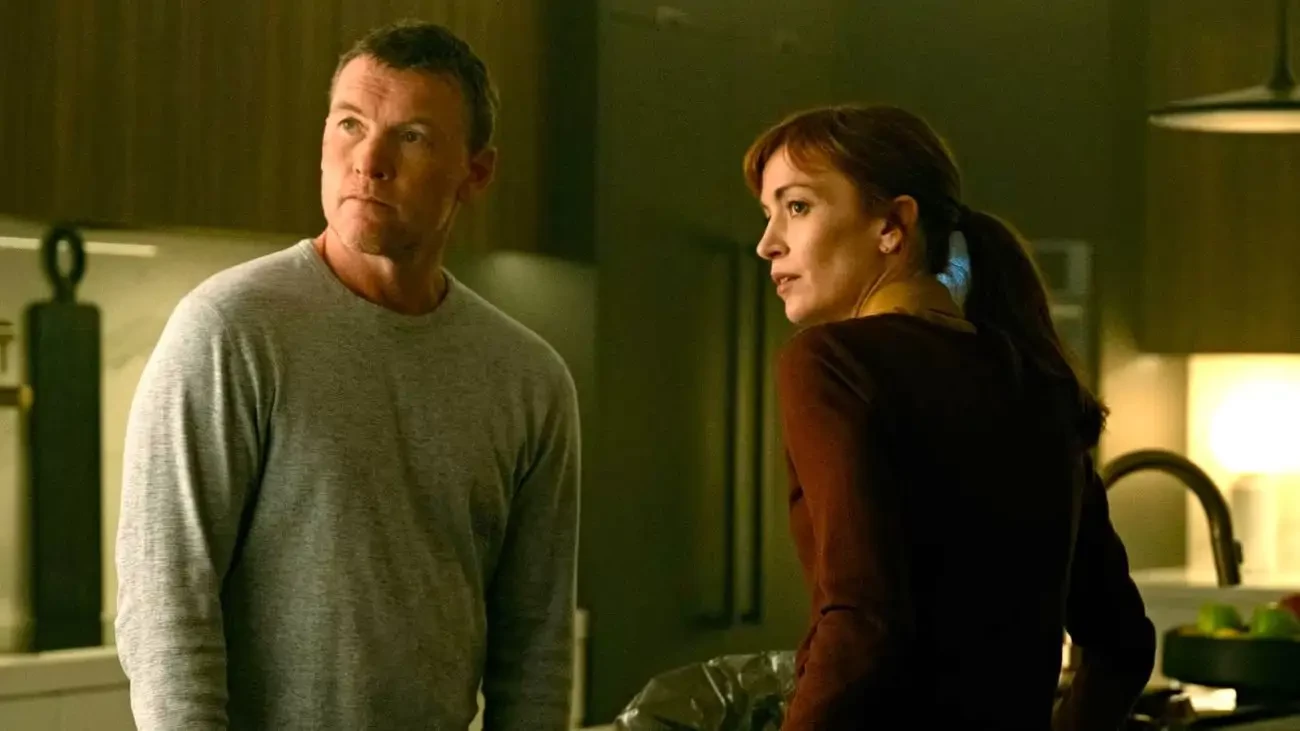
The story opens grimly in a maximum-security prison, where the protagonist David Burroughs (Sam Worthington) is serving a life sentence for a crime that strikes at the absolute worst fears of any parent: the brutal murder of his own young son. David is hollowed out by grief. Trapped by structural forces he cannot comprehend, he is at the mercy of a sinister power that seems determined to destroy whatever remains of his life.
The story starts quickly with a classic Coben twist. David is visited by his ex-sister-in-law, Rachel, a former journalist, who presents him with a photograph taken at a theme park. In the background of her image, however, is a boy with a distinctive, familiar birthmark—a boy who should be dead, but who appears very much alive. All this packed in one episode creates an addictive hook to the show.
David is helped by the warden (and his ex-cop father’s friend) and his son (who is also David’s best friend) and they stage a daring, high-stakes prison break. As David hits the road to uncover the truth and find his son, he is pursued relentlessly by a specialised Fugitive Task Force. What follows is an absolute mishmash of genre tropes. The narrative quickly sidesteps its gritty prison-break roots to become a dad-daughter cop dramedy, it takes a brief interlude into a "will-they-won't-they" romantic melodrama, and finally swerves directly into a telenovela-style pastiche.

The most redeeming quality of I Will Find You is its pacing. Some narrative structures in past Coben adaptations have had a tendency to go completely wayward, wandering down dull narrative cul-de-sacs that fail to hold the viewer's attention. I Will Find You avoids this pitfall by keeping its foot firmly pressed on the accelerator.
Just as a particular storyline begins to test your patience, a new piece of information is dropped, a character is betrayed, or a dramatic chase sequence resets the clock. The direction leans into forward momentum above all else. Just as well, so that the viewer does not pause to think too hard about all the trite coincidences and gaping loopholes.
The primary actors treat the material with a grounded intensity that temporarily blinds the audience to the ridiculousness of the script. Madeleine Stowe, in particular, walks away with the unofficial award for Best Bad Lines Delivered with a Straight Face. Stowe is brought in primarily to lend a recognisable face and magnetism to the screen. She serves little more. Her presence simply highlights the narrative's ridiculousness without offering the depth needed to salvage it.
The telenovela-style execution exposes the show's structural flaws, feeding directly into a glaring issue across the board: the stark disparity in acting quality. While the leads carry the emotional weight of the narrative, the supporting cast puts forward a distinctly lack-lustre effort. This is an ongoing symptom of the Netflix-Coben factory line: outside of the central stars, the universe is populated by two-dimensional caricatures who often feel like they are reading their lines off cue cards.
Despite anchoring a massive portion of the main story arc and commanding significant screen time, Rachel suffers from a jarringly faint screen presence. Her flat, under-the-breath murmur feels entirely disconnected from the narrative—a subdued, deadpan delivery that stands in bizarre contrast to the high-octane jump scares that routinely detonate right in front of her.
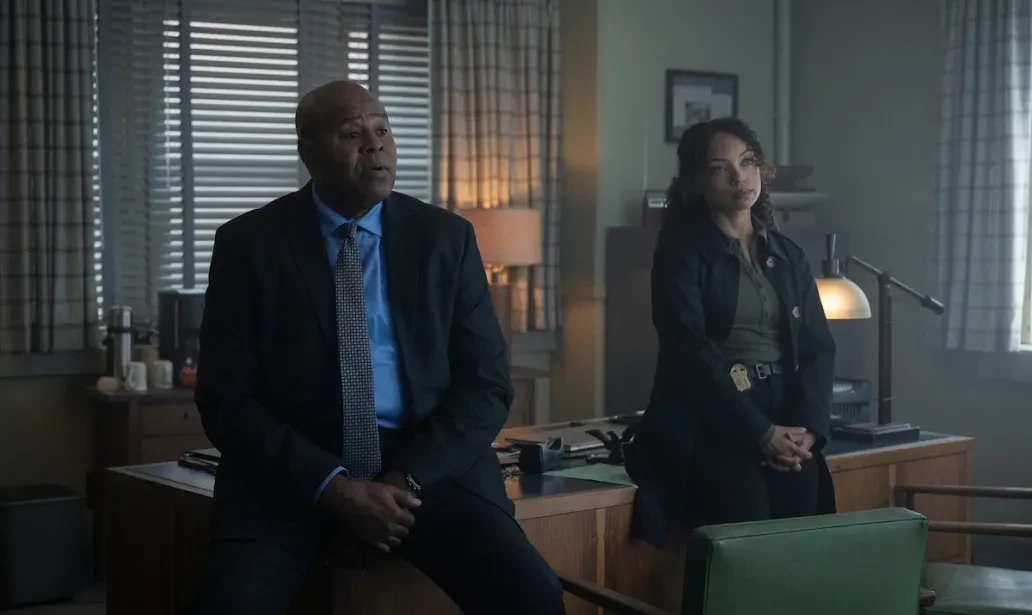
Consider the law enforcement duo tasked with hunting David down—a father-and-daughter cop partnership whose relation is revealed to the audience until deep into the third episode. The father is the archetypal jaded supercop at the tail-end of a long career. The daughter is a plucky young go-getter carrying a massive chip on her shoulder. Their story arc vies for its own limelight and pushes David’s mission completely to the backburner with their clever cop banter.
When interviewing suspects, their performative double-act resembles a bizarre puppet show. They rarely interrogate the actual suspect; instead, they stand in front of the witness and aggressively ask each other rhetorical questions while nodding fiercely at their own sentences. The backstory given to them—that the father used blatant nepotism to pull his daughter into his department to fix their broken relationship—is dropped into the plot and then promptly goes nowhere.
In fact, I Will Find You is strangely obsessed with nepotism to the point of absurdity. In this universe, every single career is either inherited, deeply compromised, or both: We have the father-daughter Fugitive Task Force. We have a corrupt ex-cop turned prison warden whose son is also a cop, and naturally, also corrupt. We have Stowe’s character, Gertrude, spending her entire existence cleaning up the messes of her prodigal son. Even our hero, David Burroughs, is bound by this loop; his father was a cop, and he was a law professor before being framed.
Even though the Coben-created universe feels tightly confined to a dozen interconnected characters who constantly collide at various crime scenes, the narrative scale remains remarkably vast and wide-reaching.
Then, there are the twists. If you enjoy an airtight detective mystery where clues logically assemble into a satisfying conclusion, I Will Find You will drive you to the brink of madness. The final episodes mutate into a surreal game of special-edition Cluedo. Was it the Gangboss with the handgun at the fairground? Was it the husband with the forged paperwork in the IVF hospital?
But, no. Every single compelling avenue turns out to be a red herring. Instead, the ultimate culprit is revealed to be a tertiary character who has been completely underexplored. The villainy is dropped onto them simply to validate their inclusion in the plot.
The narrative relies entirely on a staggering mountain of loopholes and happy coincidences. Characters arrive at precise locations at the exact microsecond required to advance the plot. Security guards turn blind eyes, high-tech prisons feature laughable security vulnerabilities, and monumental life-and-death conspiracies are unravelled by characters stumbling into the right room at the right time. And annoyingly, the resolution doesn't land with the satisfying thud of an earned mystery;
Despite the limp logic, the uneven acting, and a plot that relies on a series of jaw-dropping coincidences, I Will Find You remains an undeniable success. Why do these shows continue to perform so exceptionally well on a global scale?
Perhaps it is because the show doesn’t give itself airs to be something more. In the landscape of British and international television, there is an old-fashioned, deeply entrenched idea that great drama must reveal profound human truths and provide gritty, human authenticity.
But I Will Find You is pitching to an entirely different market. It doesn't want to make you ponder the human condition; it wants to distract you from it. It is junk food for the brain. Moreover, it executes this formula with shameless confidence. You can’t help but respect the hustle. I Will Find You is ridiculous, flawed, and structurally chaotic television. But as the credits roll on episode eight and the automatic countdown for the next Netflix project begins, you will realise the ultimate truth of the Harlan Coben universe: you watched the entire thing, you enjoyed it in the moment, and you will do it again next time.





 English (US) ·